Selling on multiple platforms without inventory conflicts
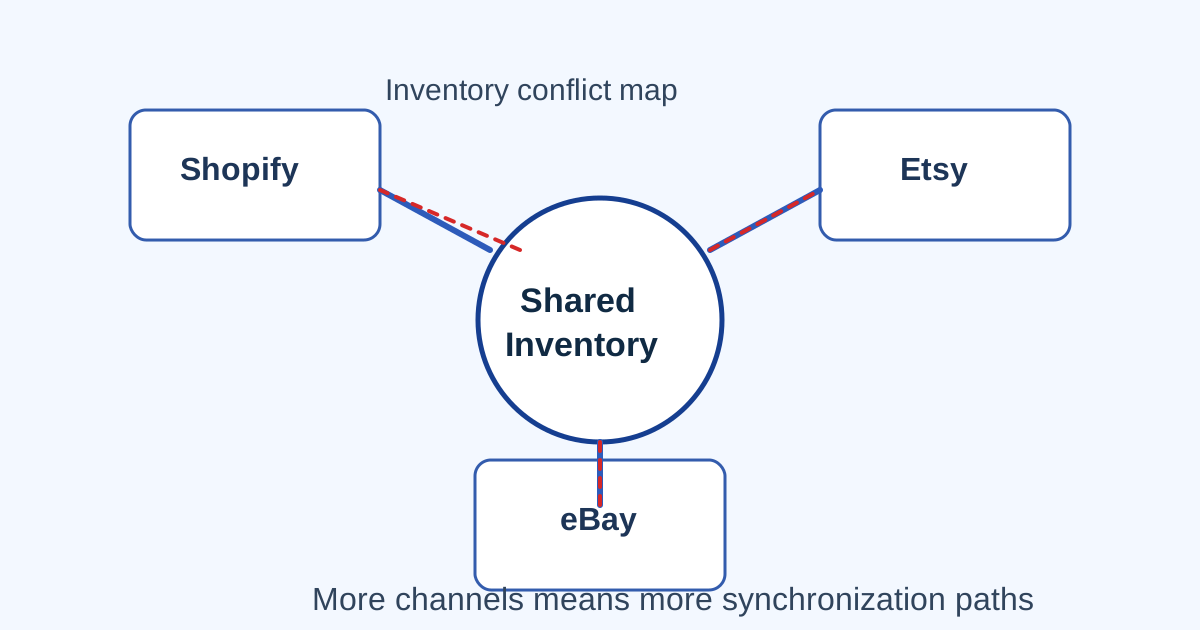
Adding channels usually breaks operations before it breaks technology. Teams that handle one dashboard well can struggle once inventory, orders, and support decisions split across multiple systems.
Example
A two-person store team starts with Shopify, then adds Etsy and eBay in one quarter. They keep quantity in a spreadsheet, run manual updates before lunch, and double-check listings at night. On busy days, one person handles support while the other edits stock, and updates fall behind real orders. By the end of the week, each channel shows different counts for the same SKUs, and no one can confirm which number is correct without checking three dashboards and recent order logs. The team is working hard, but channel drift grows faster than manual control.
What happens
You list the same SKU on Shopify, Etsy, and eBay. A sale lands on one channel, then another channel sells from stale stock. Your team sees valid orders in multiple dashboards but only one physical unit is available to ship.
Why it happens
Channels are not one shared cart. They are separate order engines connected by sync jobs. Inventory moves through update cycles, and the cycle time differs by platform. During those windows, each channel can act on outdated data.
Those sync gaps often appear as inventory not syncing and eventually become overselling incidents when teams cannot react in time.
Operational symptoms
- manual updates in multiple dashboards every day
- spreadsheet corrections after each order spike
- team confusion on which channel quantity is correct
- late conflict detection during fulfillment
How sellers try to solve it
- spreadsheets
- manual updates
- buffer stock
- closing listings
Why this fails at scale
With two channels, manual reconciliation can be painful but possible. With three or more, the number of pairwise checks grows quickly. Manual methods do not keep up with real-time order flow, and teams spend more time reconciling than improving catalog, pricing, and fulfillment.
Conflict handling also becomes inconsistent across staff and shifts. One operator may prioritize first-paid orders, another may protect marketplace metrics, and decisions vary case by case. Without shared conflict visibility, these differences create repeatable operational noise.
How GNIZDO helps
GNIZDO gives you a cross-channel view of where inventory commitments collide. It flags conflict-prone SKUs and mismatch events, so you can prioritize fixes before they become oversells and cancellations.
In practice, this means fewer surprises during peak hours: you see which channels diverged, which products are exposed, and where to intervene first. It supports consistent operator decisions instead of ad-hoc firefighting.
Common inventory sync questions sellers search for
How do sellers keep inventory synced across channels?
Most teams choose one source of truth and push quantities outward to marketplaces. They also define clear ownership for failures, so someone reacts when updates are delayed. Without response rules, sync errors stay unresolved and become operational noise. Cross-channel sync is more about process discipline than one-time setup.
Why do stores oversell on multiple platforms?
Overselling usually starts when operational handoffs are unclear. One person edits stock manually, another processes orders, and no one sees live mismatch alerts. By the time the conflict is visible, two channels may have already accepted payment for the same last unit.
What causes inventory mismatch between Shopify and marketplaces?
Mismatch often starts with technical lag, then grows because manual workflows cannot keep up. Spreadsheets are snapshots, not event systems, so they are always behind active checkouts. As channels increase, pairwise checks become too many for one team to maintain accurately.
When do spreadsheets stop working for multichannel selling?
Spreadsheets can work with low order volume and few channels. They fail when variants, bundles, and daily order count rise because each sale can affect multiple rows and listings. The failure signal is repeated correction work after every sales spike.
How fast should inventory sync run in a multichannel store?
Sync should run on every order event with frequent health checks, but the true target is lower incident duration, not only higher frequency. If the team still discovers conflicts during fulfillment, current cadence is too slow for the actual order velocity.
Can two platforms sell the same last item?
Yes. Separate checkout systems can confirm orders before stock updates propagate. This is why multichannel operations need both sync and conflict monitoring. One without the other leaves a gap where paid orders can collide.
FAQ
What breaks when I add a second sales channel?
When do spreadsheets stop working for multichannel inventory?
How do sellers keep one source of truth?
What is the simplest way to reduce multichannel inventory conflicts?
Tools
Tools that help detect these problems while selling on multiple channels:
- Inventory monitoring to keep stock aligned across stores
- Order flow visibility to handle cross-channel conflicts
- Oversell risk calculator to quantify losses from conflicts and refunds
Related problems
Related guides
Get early access to conflict monitoring
Use GNIZDO to detect cross-channel inventory conflicts early and keep multichannel growth operationally stable.
Something went wrong. Please try again.
Thanks — we’ll reach out when early access opens in March 2026.