Overselling when selling on multiple platforms
Overselling is mostly a margin problem, not only a sync problem. One wrong order creates refund cost, support time, and a customer who may not return.
Example
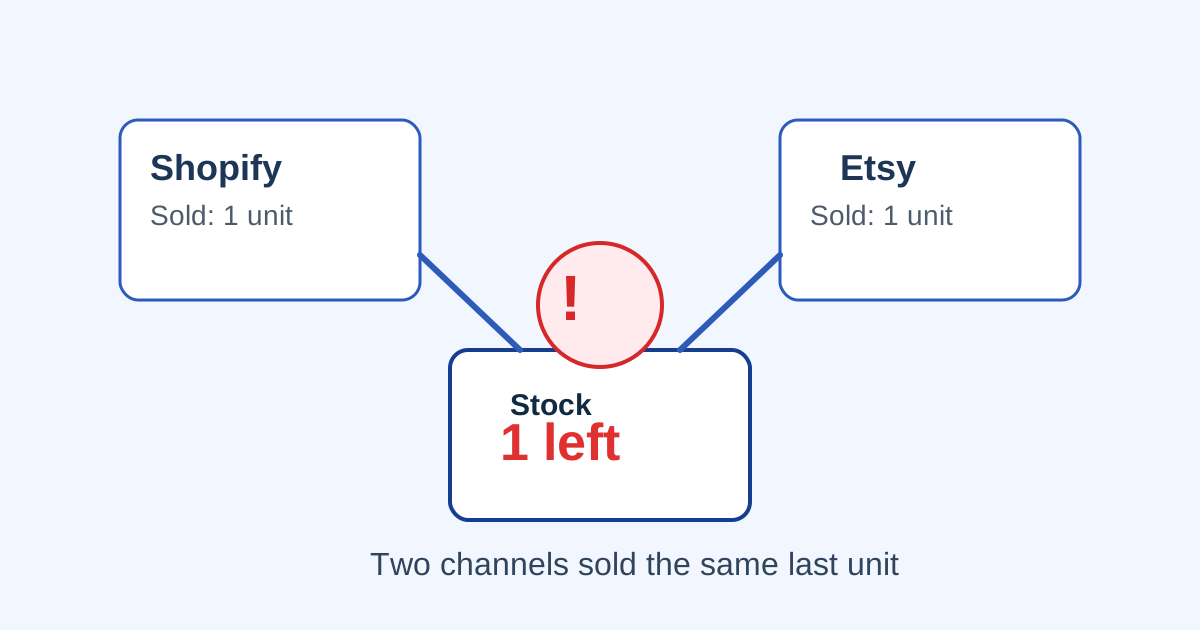
A home-goods seller has one ceramic lamp left and lists it on Shopify and Etsy. At 18:42 the Shopify checkout succeeds and local stock drops to zero. The Etsy update call is delayed by retries, so the Etsy listing still shows one available unit. At 18:44 another buyer checks out on Etsy and receives confirmation. By 19:05 fulfillment notices two paid orders and one product on the shelf. The store issues a refund, spends support time explaining the error, and receives a negative review that mentions cancelled orders.
What happens
You have one unit left. A buyer checks out on Shopify. Minutes later another buyer checks out on Etsy. Because each channel accepts the order independently, both customers receive confirmation while your shelf has one product.
Why it happens
Marketplaces are isolated systems. They do not reserve stock across each other in real time. Inventory updates move through APIs, queues, and retries, and those steps introduce delay. Overselling happens inside that delay window.
Typical symptoms
- oversold orders
- refunds
- cancelled orders
- bad reviews
- marketplace ranking drops
How sellers try to solve it
- spreadsheets
- manual updates
- buffer stock
- closing listings
Why this fails at scale
Manual control works with a small catalog and low order volume. It breaks when you add more SKUs, more channels, and more simultaneous checkouts. Buffer stock reduces risk, but it also hides real availability and limits sell-through. Closing listings repeatedly hurts ranking and creates extra operational churn.
Another issue is accountability. When a mismatch appears, it is hard to reconstruct what happened from scattered channel logs and spreadsheet notes. Teams lose time on investigation instead of resolution, and the same failure pattern repeats next week.
Technical root causes are usually the same as on inventory not syncing, but overselling is where those failures become direct financial loss.
How GNIZDO helps
GNIZDO tracks inventory and order signals across channels and highlights collision risks before they become customer-facing failures. Instead of checking five dashboards, you get a focused exception view of where stock and orders diverge, so you can act fast.
That view also gives operators context around each risk: which channels are involved, which SKU is exposed, and what changed recently. The goal is not theoretical perfect sync, but faster detection and fewer preventable cancellations.
Common inventory sync questions sellers search for
Why do stores oversell on multiple platforms?
Stores oversell when channels accept orders independently during the same low-stock window. One marketplace can still show old quantity while another already sold the last unit. This is common during peak hours, API retries, or queue lag. Overselling is not only a technical bug; it is an operations risk that appears when detection is slower than checkout speed.
Can two platforms sell the same last item?
Yes. If Shopify and Etsy both display one unit and updates are not instant, both checkouts can complete before quantities align. That creates two valid payments for one physical item. The risk is highest for low-stock fast sellers and promotional traffic bursts where orders arrive within seconds.
How does overselling affect customer trust?
Customers who receive cancellation emails after payment are less likely to reorder. Even when refunds are processed quickly, buyers remember the failed fulfillment. Over time this lowers repeat purchase rate and increases support workload. Trust damage is usually larger than the direct refund amount.
Why do refunds increase after inventory conflicts?
When stale stock remains visible, customers can buy unavailable items. Those orders cannot be fulfilled and must be refunded, often with extra support communication and payment fee loss. If detection happens late, multiple orders can accumulate on the same SKU and multiply financial impact in one shift.
How do sellers keep inventory synced across channels?
The practical baseline is one source of truth, event-driven updates, and fast alerting on failed pushes. Teams also maintain a daily watchlist of low-stock high-velocity SKUs. This does not eliminate all lag windows, but it shortens incident duration and reduces refund volume.
How fast should inventory sync run?
For active catalogs, updates should run continuously on order events with health checks every few minutes. Hourly-only sync may look stable in reports but is too slow for fast sellers. What matters is not only configured frequency but actual end-to-end lag under real traffic.
FAQ
Why do I oversell even when inventory sync is enabled?
How does overselling affect marketplace ranking?
Why do refunds increase after inventory conflicts?
What is the fastest way to reduce oversell damage?
Tools
Tools that help detect these problems before they become cancellations and refunds:
- Inventory monitoring for stock and quantity checks
- Order flow visibility for conflict handling across channels
- Oversell risk calculator to estimate the cost of refunds and lost sales
Related problems
Related guides
Get early access to oversell risk monitoring
If your team is spending time cancelling orders and explaining stock errors, join the GNIZDO early access list.
Something went wrong. Please try again.
Thanks — we’ll reach out when early access opens in March 2026.