Inventory not syncing across Shopify, Etsy, eBay
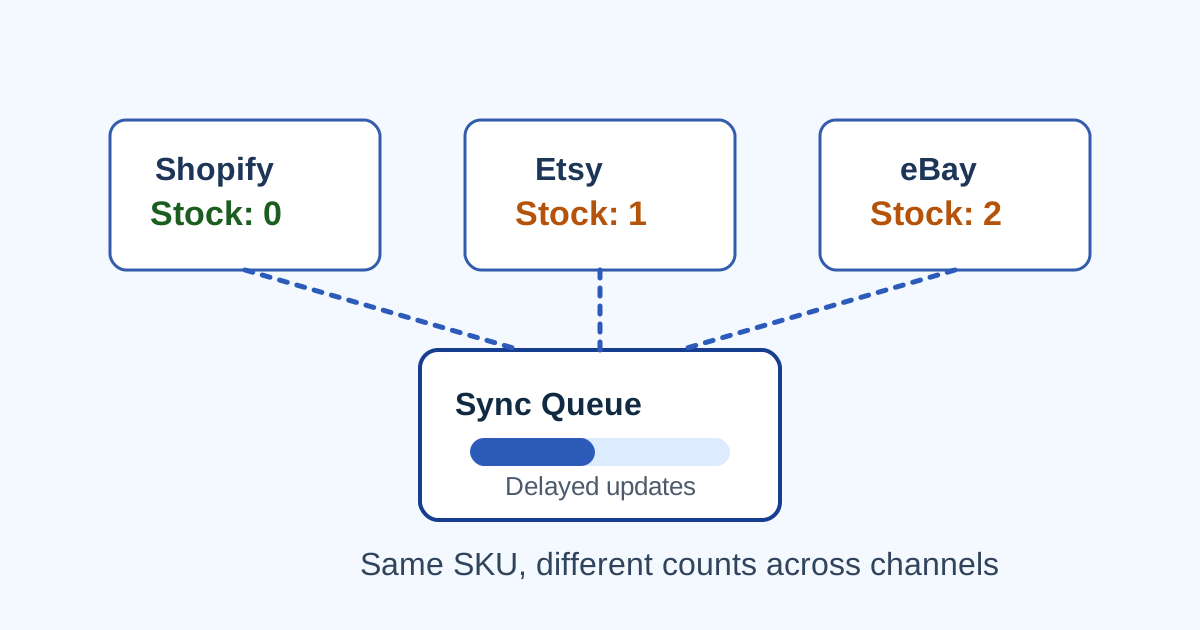
Inventory not syncing is usually a technical reliability issue: failed requests, queue lag, retry storms, or SKU mapping mistakes. Until you identify the failure point, counts stay split across channels.
Example
At 10:12 a Shopify order reduces quantity from 2 to 1. The integration queues an update for Etsy and eBay, but the Etsy request times out and enters retries. At 10:15 eBay already shows 1, while Etsy still shows 2 because the retry window has not cleared. At 10:17 a second Etsy order is accepted from stale stock. The operations team sees different timestamps across channels, cannot trust spreadsheet snapshots, and spends the next hour checking logs, correcting quantities, and deciding which paid order to cancel.
What happens
You sell an item on Shopify and expect the count to drop everywhere. Etsy still shows old stock, eBay shows another number, and by the time you notice, new orders are already queued from outdated listings.
Why it happens
Each platform stores its own inventory state. Sync is a separate process running through APIs, jobs, and retries. If one push is late or fails, channels drift apart. The platform that sold the last unit knows it is out of stock; others continue selling until they receive the update.
When this repeats while selling on multiple platforms, operators end up fixing symptoms manually instead of removing the technical bottleneck.
Technical symptoms
- failed or repeated sync retries
- different quantity timestamps per channel
- timeouts and rate-limit errors in logs
- stock mismatch on low-SKU watchlists
How teams usually react
- manual correction in channel dashboards
- forced quantity resets from spreadsheets
- larger buffer stock to hide drift
- temporary listing pauses
Why this fails at scale
As order velocity grows, drift windows become expensive. Spreadsheets lag behind live events, manual updates miss edge cases, and extra buffer stock lowers conversion on fast-moving SKUs. Closing listings to stay safe can suppress channel momentum and adds more repetitive work.
How GNIZDO helps
GNIZDO monitors channel inventory states and detects when one system diverges from the others. You get clear mismatch signals and conflict context, so your team can resolve the right SKUs first and reduce customer-facing failures.
Common inventory sync questions sellers search for
Why does Shopify inventory not update on Etsy?
The most common reasons are failed API calls, retry backlog, and SKU mapping issues. Shopify can update locally while Etsy keeps older quantity because the outbound update did not complete. The fix starts with event logs: verify order timestamp, push attempt, retry status, and final confirmation for the same SKU.
What causes inventory mismatch between Shopify and marketplaces?
Mismatch usually comes from three sources: timing delay, API failure, or mapping inconsistency. Timing means updates are late but valid. API failure means a channel never receives the new count. Mapping inconsistency means updates target the wrong listing. Identifying which one happened determines whether you tune queue behavior or repair catalog mapping.
How fast should inventory sync run?
Sync should run on every order event, not only on periodic batch jobs. For busy stores, health checks every few minutes are a practical minimum. If your measurable lag regularly exceeds checkout speed for fast SKUs, configured frequency is not enough and you need queue and retry optimization.
How do API limits and timeouts affect stock updates?
Rate limits and timeouts increase retry queues and extend stale-stock windows. During promotions, these delays can stack and create several minutes where channels disagree. One failed retry cycle is enough for an oversell on low stock items, so operators need immediate visibility into repeated errors.
How do sellers keep inventory synced across channels?
Sellers keep sync reliable by combining technical controls and operational routine: strict SKU mapping, monitored pushes, retry dashboards, and low-stock watchlists. The goal is not zero lag, but fast containment when lag appears. Teams that respond within minutes prevent most customer-facing failures.
Can two platforms sell the same last item during sync lag?
Yes, if one channel is stale while another has already sold the final unit. This is exactly why lag metrics matter. A store might believe sync is enabled, yet still oversell because effective lag under load is longer than expected.
FAQ
Why is my stock not updating between Shopify and Etsy?
How often should inventory sync run?
What causes delayed inventory updates?
How do API errors and timeouts affect stock?
Tools
Tools that help detect these problems before stock mismatches become support tickets:
- Inventory monitoring for channel-by-channel stock checks
- Order flow visibility when updates fail between systems
- Oversell risk calculator to estimate refund and cancellation impact
Related problems
Related guides
Get early access to sync issue detection
Join GNIZDO early access to spot inventory drift before it turns into cancellations and support tickets.
Something went wrong. Please try again.
Thanks — we’ll reach out when early access opens in March 2026.