Home -> Guides -> Inventory Sync vs Buffer Stock
Inventory Sync vs Buffer Stock
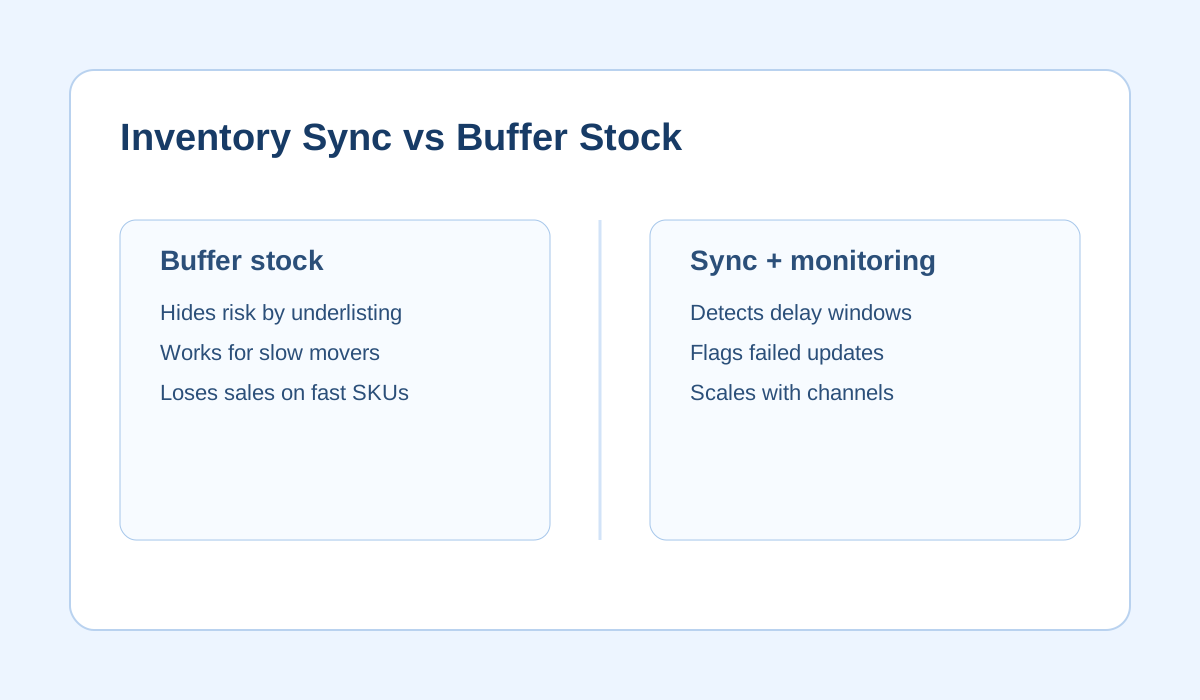
What is buffer stock
Buffer stock is a deliberate underlisting strategy. If you physically hold 20 units, you might publish 16 to absorb sync delays and reduce oversell risk.
When sellers use buffer stock
Sellers usually apply buffer stock when they have unstable sync timing or no alerting workflow. It can stabilize operations temporarily for low-volatility catalogs.
Why buffer stock fails at scale
As order velocity rises, buffers hide real sellable inventory and reduce conversion on fast SKUs. Teams still need to track delayed updates, so the operational issue moves but does not disappear.
Inventory sync tools
Sync tools move quantity updates between channels, but results depend on mapping quality, API health, and retry behavior. Use inventory management and inventory not syncing playbooks to monitor those dependencies.
Monitoring approach
A monitoring-first setup tracks failed pushes, lag windows, and low-stock risk in near real time. It reduces cancellations more reliably than manual correction alone. Use overselling and oversell cost calculator to measure improvement.
| Approach | Works when | Fails when |
|---|---|---|
| manual updates | low orders | busy days |
| buffer stock | slow products | fast sellers |
| spreadsheet | few SKUs | many channels |
| monitoring | scalable | requires alerts |